Lighting as a System, Not an Afterthought
Why lighting needs to be designed as an environment first, not added after scenery and structures are finished.
If you spend enough time browsing layout photos or watching layout tours on YouTube, a pattern becomes hard to ignore. Many layouts are built under whatever lighting happens to exist in the room. Overhead LED panels, fluorescent shop lights, or a few bright fixtures added after the fact. The layout is visible, functional, and well built, but the lighting itself is largely incidental.
That approach works. You can build. You can operate. You can take photos.
What it rarely does is create mood.
For me, lighting is not a finishing detail that comes after scenery, structures, and track are complete. It is the environment the entire railroad exists within. It determines how colors read, where shadows fall, and whether a scene feels like a small world or a model under a ceiling light. Because of that, I treat lighting as a system that needs to be designed early, not something to retrofit once everything else is locked in.
The moment lighting became foundational
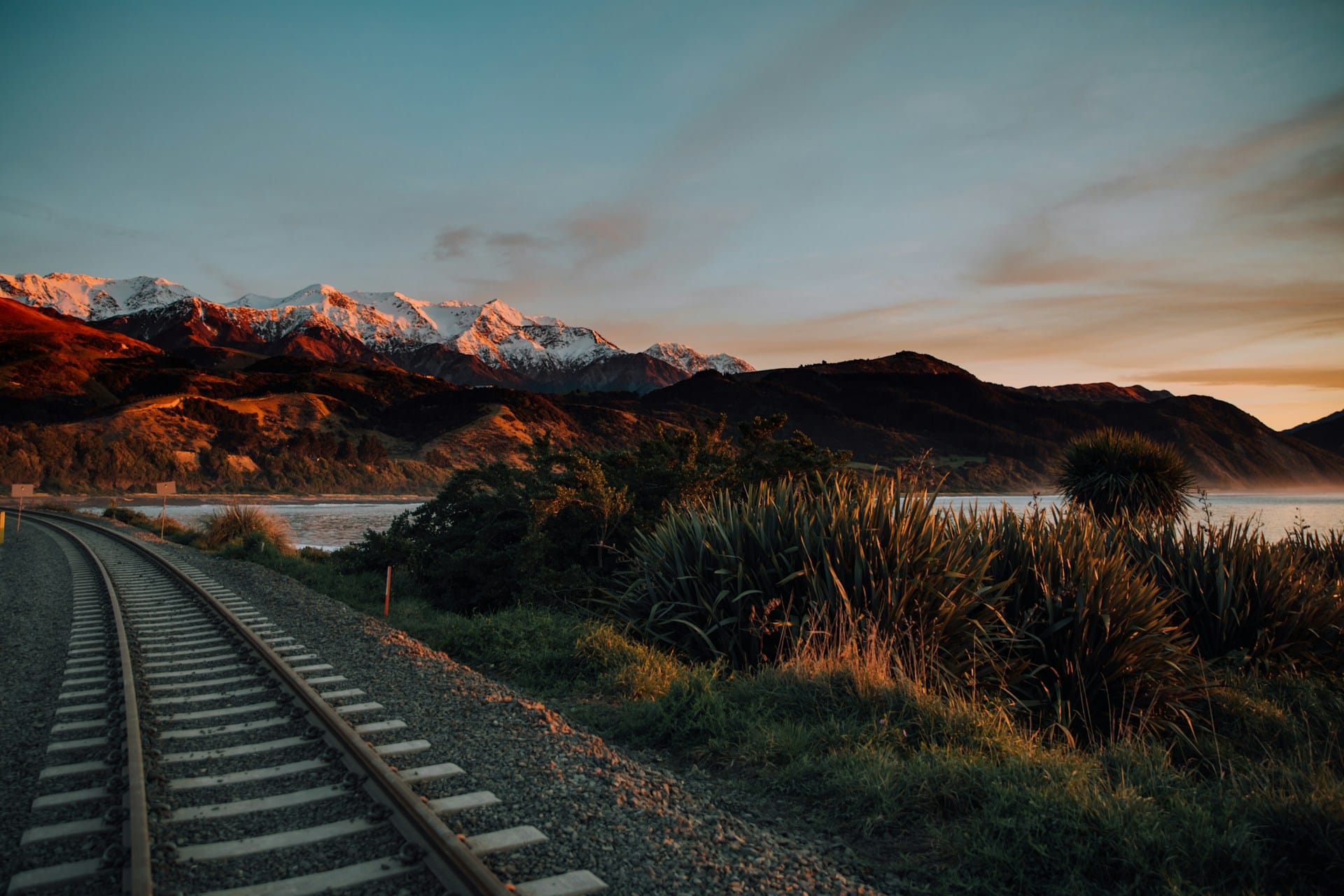
Years ago, I came across layout lighting work by Vikas Chander that completely shifted how I thought about the problem. The scenes felt believable in a way that went beyond added detail or careful modeling. They felt like places that existed under a real sky.
Yes, there were structure lights, streetlights, and window glow, and those absolutely mattered. But what stood out most was the general lighting of the room. The way the entire environment transitioned through time of day. The way shadows softened, lengthened, or disappeared. The way night scenes felt like night without becoming unreadable.
That was the point where it became clear to me that local lights alone cannot carry the illusion. The global light comes first.
Why room lighting comes before detail lighting
It is tempting to jump straight to building lights and streetlights. They are tangible, satisfying, and feel like progress. I enjoy those details and will spend plenty of time on them later.
But those are local effects. They only read correctly when the overall lighting environment is already doing its job. If the room lighting has no direction, no intentional color choices, and no ability to change over time, every small light has to work harder than it should. The result often feels like a display rather than a world.
The goal is not simply brightness. The goal is believability.
When the global lighting is right, structure lights and streetlights enhance the scene instead of fighting it. They feel like part of an environment rather than decorations added on top.
A systems mindset
Outside of model railroading, I have always been drawn to systems that can be tuned, programmed, and adjusted over time. That same mindset applies here. Lighting does not need to be static. It can be orchestrated.
Seeing other builders experiment with programmable lighting, including smart lighting approaches like those from Philips Hue, reinforced that idea. Those experiments are not prescriptions for how a layout must be built, but they demonstrate an important principle. Lighting can be treated as an environment that changes, not a fixed condition you accept.
That distinction is what matters.
Why this work is happening now
In earlier houses, I never had the space or flexibility to properly explore layout lighting. Effective lighting requires planning, mounting, structure, access, and the ability to iterate without tearing a room apart. It is not something that works well as an afterthought.
Now, I finally have the space and the opportunity to test these ideas realistically. Time is always a constraint, but the conditions are right to experiment, learn, and refine without pretending the first solution will be perfect.
The concept I am building toward
The core idea is straightforward, even if the execution takes time.
I want a lighting system that provides practical working light when needed, but can also run a believable day and night cycle. That means moving through the stages of sunrise and sunset, including daylight, golden hour, civil twilight, nautical twilight, astronomical twilight, and night, before reversing the process again.
The system needs to be:
- Focused on mood and atmosphere rather than raw brightness
- Affordable enough to be practical
- Scalable from small prototypes to a future layout
- Designed to evolve rather than lock in early decisions
This lighting becomes the foundation that everything else is built on. Structure lights, streetlights, and interior lighting will come later, layered on top of an environment that already behaves like a world.
I have already begun prototyping the uplighting portion of this system, with an emphasis on sunrise and sunset behavior rather than final installation or controls. The goal at this stage is to validate the experience before worrying about permanence.
Scope and boundaries
The intent here is to share the thinking, goals, and outcomes of this work openly. Some implementation details are intentionally left out, both because they are still evolving and because I want the flexibility to package parts of this work more formally in the future.
What will be documented publicly is whether the ideas work. If something fails, that matters. If something succeeds, the results should be visible, even if the wiring and logic stay behind the curtain for now.
What comes next
Lighting does not exist in isolation. It needs surfaces, layers, and depth to interact with. The next step is to look at how layered backgrounds and scenery planes work together with global lighting to create the illusion of distance and atmosphere.
Before track plans, before full benchwork, before finished scenes, the environment needs to be believable. Lighting is the first part of that environment, not the last.